
Crossroads to Commission
How Irish Dance got its rules
Welcome to class — I’m really happy you’re here. Every so often I’ll send along something like this: a bit of background, history, or context that might add some depth to what we’re doing together in the studio. Think of these as totally optional reading for the curious-minded.
In the last article I sent, we reviewed the early history of dance in Ireland. This article explores what happened after the 1700s. If you want to catch up, read the other article, here.
So — the 1700s. Dance masters traveled the island, teaching their steps. Irish folk kept dance and music alive in secret schools, in their homes, and in other covert ways that flouted the penal laws.
The Great Famine + Emmigration
This continued until 1845, when the Great Famine devastated Ireland. The impact of the famine on Irish cultural practices can’t be overstated — this was a period of mass starvation, disease, and forced emigration that tore communities apart.1
Dancing masters were no longer able to make a living teaching dance, and those who survived were likely forced into workhouses. Healthy citizens left the country — without hope of returning — to try to find better lives elsewhere. The famine was an intense social crisis with far-reaching impacts around the world. It hit hardest in Irish-speaking areas. Many Irish language speakers were lost, dance and music traditions declined, and oral histories were decimated.
As Irish immigrants arrived elsewhere seeking basic human rights, they were met with intense discrimination, fueled by pro-colonization propaganda. Some British politicians at the time believed the famine’s devastating impact was a divine judgment on Catholic Irish people — a spiritual punishment for a supposed lack of moral character. The media portrayed Irish people as lazy, drunk, unintelligent, and untrustworthy, and humanity’s general tendency to fear “the other” — especially when that other might take someone else’s job — reared its ugly head.
America absorbed the most Irish immigrants during this period, but Britain, Australia, and other parts of the world saw an influx of migrants as well. Irish people faced intense discrimination everywhere they went and were forced into the most societally undesirable jobs available.2
Recovery and Celtic Revival
As Ireland attempted to recover from the famine, families raised their children in English and moved away from traditional cultural practices — practices that had become associated with devastation. In areas where Irish folk traditions had once thrived, people intentionally tried to become “more English” so their children might have better opportunities when they emigrated or tried to find work under the English system. This led to the rise of an educated, Catholic middle class in Ireland.
By the late 1800s and early 1900s, there was a renewed interest in Celtic cultural traditions. Customs that had previously been seen as low-class — speaking Irish, dancing, playing music in the traditional style — began to become a badge of honor. The new nationalist movement sought to build a cultural country, not just a political one, and fear spread that Irish traditions might be lost entirely.
In response, the Gaelic League (Conradh na Gaeilge) was formed with the initial intention of preserving the Irish language in 1893. The goal of the league became to de-Anglicize Ireland, and it became a cornerstone of the broader nationalist movement.
The league gave Irish dance its name — before this, it was simply dance done by Irish people — and codified what Irish dance was. They gathered social dances from around Ireland, wrote them down, and created rules about how Irish dance could be performed. It was important to the league that Irish dance be strictly moral, so rules about posture and arm placement were established. If you’ve taken class with me, you’ve probably seen me refer to a book when I’m teaching a ceili I’m less familiar with — the dances in that book is one that the League created during this period.
In 1930, the League established an official governing body for dance called An Coimisiún Le Rincí Gaelacha (the Irish Dancing Commission, or CLRG). This group created strict exams, certified teachers, and regulated competitions. Over time, the establishment of the CLRG — and subsequent Irish dance organizations — transformed Irish dance from a casual rural pastime into a highly disciplined, competitive global sport.
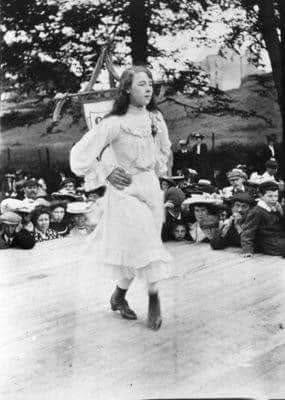
Importantly, the League and the CLRG maintained tight control over the definition of Irish dance — and many forms of dance done in Ireland were intentionally excluded from that definition. Today, many Irish dance practitioners hold inflexible attitudes about what Irish dance is and isn’t, who can and can’t participate, and cling to strict rules that reflect those origins.
Dance Halls Act
The other major force shaping Irish dance during this period was the Catholic Church. Throughout the eras when Irish culture flourished — pre-famine and again in the post-famine 1900s — communities gathered at the crossroads to dance, play music, share gossip, and flirt. Think of it as the club, but make it rural Ireland. People even built elevated platforms for dancers at the crossroads. Up through the 1920s, the Church wasn’t particularly concerned about these gatherings — but they began getting rowdier, as the crossroads became a gathering spot for rural youth to organize politically. There are accounts of rival political factions burning each other’s dancing platforms to the ground.
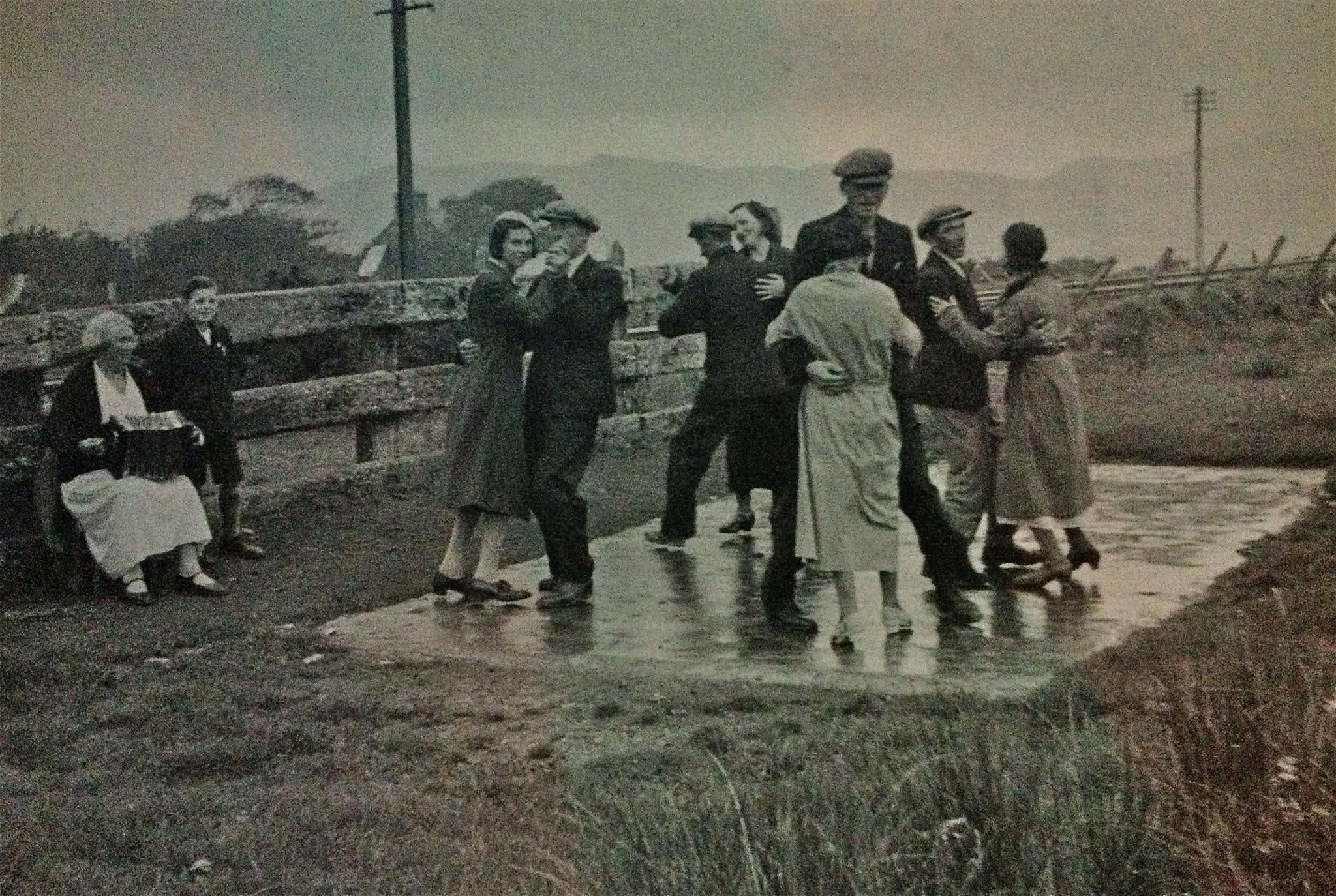
By this point, Ireland had its own newly elected government, and the country was still working to project an image of Catholic respectability to the world — remember, much of that world still doubted Ireland’s capacity for self-governance. Rowdy crossroads parties and open political organizing weren’t helping that image.
In 1935, with the backing of the Church, the government enacted the Dance Hall Act, which effectively banned public gatherings that weren’t church-sponsored. The consequences were significant: regional dance styles were erased as dances became codified and church-led; traditional musicians lost income as structured dances required louder bands — leaving instruments like the fiddle and whistle behind; and social time became commercialized, as rural people now had to pay admission to attend dances that had previously just been neighbors gathering together.3
By the mid 1900s, Irish dance had changed dramatically, completely transformed by local and global political and social events. It’s been both shaped by nationalist pride and constrained by institutional control. It got a name, it got a bunch of rules, it got policed and politicized. Irish dance was now organized, competitive, morally regulated, and increasingly removed from the spontaneous community tradition it had grown out of.
Irish dance continued on this path until the 1990s, when the 1994 Eurovision Song Contest went in a direction no one could have predicted. Irish dance was suddendly brought to the cultural forefront. That is what we’ll look at next. Oh! And, and this only briefly covers what was happening with Irish dance in Ireland, we also have to get to what happened in the United States.
Notes
1My expertise is not in history or global politics, but there is ongoing debate about the impact of colonization and governmental negligence related to the famine. Given the ways in which history repeats itself (and the repeating history we’re seeing in the world right now) this is very much not just about dance, and is just one way in which dance and politics intersect in a very real way. For additional resources on this topic, see the resources section below.
2As early as the 17th century, and widespread by the 19th century, Irish people were sharing spaces with African people in the Caribbean and American colonies, urban slums, and as laborers, indentured servants, and, in some cases, as participants in the slave trade. This history deserves its own deep dive — it's extremely complex. For the purpose of this article, I want to be direct: though historically Irish people were treated with extreme racism and discrimination, they no longer suffer the institutional racism, discrimination, and hardship that Black people do.
3Not so fun fact, the dance hall act was never repealed in Ireland and impacts how nightlife operates in Ireland today. You can read more about that here.
Do you have specific questions you’d like me to answer in these articles? Pieces you’d like to discuss more? Things you heard about Irish dance that you think are worth a deep dive? Let me know! You know I can talk about this topic all day…
Additional Resources
If you want to do some of your own reading and research….
An Gorta Mór: The Question of the Irish “Genocide”
Why Ireland is one of the most pro-Palestinian nations in the world